
Occasion: World Environment Day

  • Make a Bird Feeder

    Make a Bird Feeder

    Making a bird feeder is a lovely craft that connects children with nature right outside their window. Using simple materials—many of which can be found around the house—you can create a homemade feeder that invites birds to stop by for a snack.

    This activity helps kids learn about local bird species, encourages empathy for animals, and promotes sustainability by reusing everyday items. Plus, watching the birds return day after day is its own kind of magic.


    Materials Needed

    • Bird seed mix
    • Natural peanut butter or lard (unsalted)
    • String or twine
    • Feeder base ideas: toilet roll tube, pinecone, empty yoghurt pot, apple core, or orange rind

    Tools Needed

    • Butter knife or spoon
    • Tray or plate for rolling in seed

    Steps

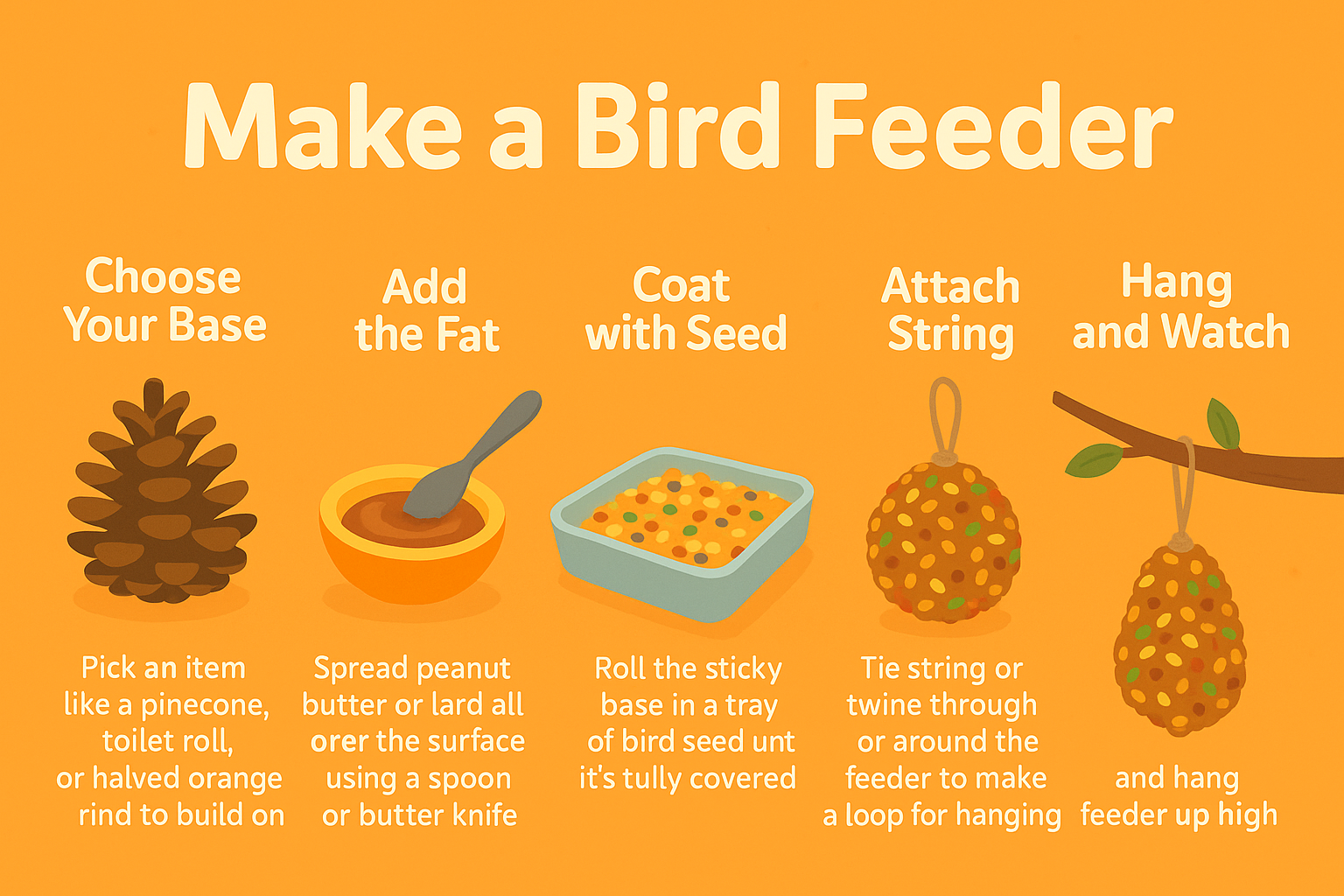
    1. Choose Your Base
      Pick an item like a pinecone, toilet roll, or halved orange rind to build on.
    2. Attach String
      Tie string or twine through or around the feeder to make a loop for hanging.
    3. Add the Fat
      Spread peanut butter or lard all over the surface using a spoon or butter knife.
    4. Coat with Seed
      Roll the sticky base in a tray of bird seed until it’s fully covered.
    5. Hang and Watch
      Choose a quiet spot—like a tree branch or balcony—and hang the feeder up high.

    Variations

    • Apple Ring Feeder: Slice an apple, coat in seed, and hang like a natural doughnut.
    • Recycled Cup Feeder: Fill a yoghurt pot with fat and seed mix, then hang it upside down from a string.
    • Decorate It: Use paper, twigs or stickers (on dry items) to give your feeder character.
    • Birdwatching Log: Keep a simple notebook to record what birds visit each day.
  • Beach Clean

    Beach Clean

    A beach clean is a brilliant way for children to learn about environmental responsibility while enjoying the great outdoors. By helping remove litter from the shore, kids contribute to protecting wildlife and keeping our natural spaces beautiful for everyone.

    This hands-on activity is a great mix of exercise, teamwork, and learning. It sparks conversations about ocean pollution, recycling, and the small actions we can all take to care for the planet.


    Materials Needed

    • Reusable gloves
    • Bin bags or compostable rubbish sacks
    • Hand sanitiser or wipes
    • Optional: litter picker or tongs, separate bag for recyclables

    Tools Needed

    • Litter picker or tongs (optional)

    Steps

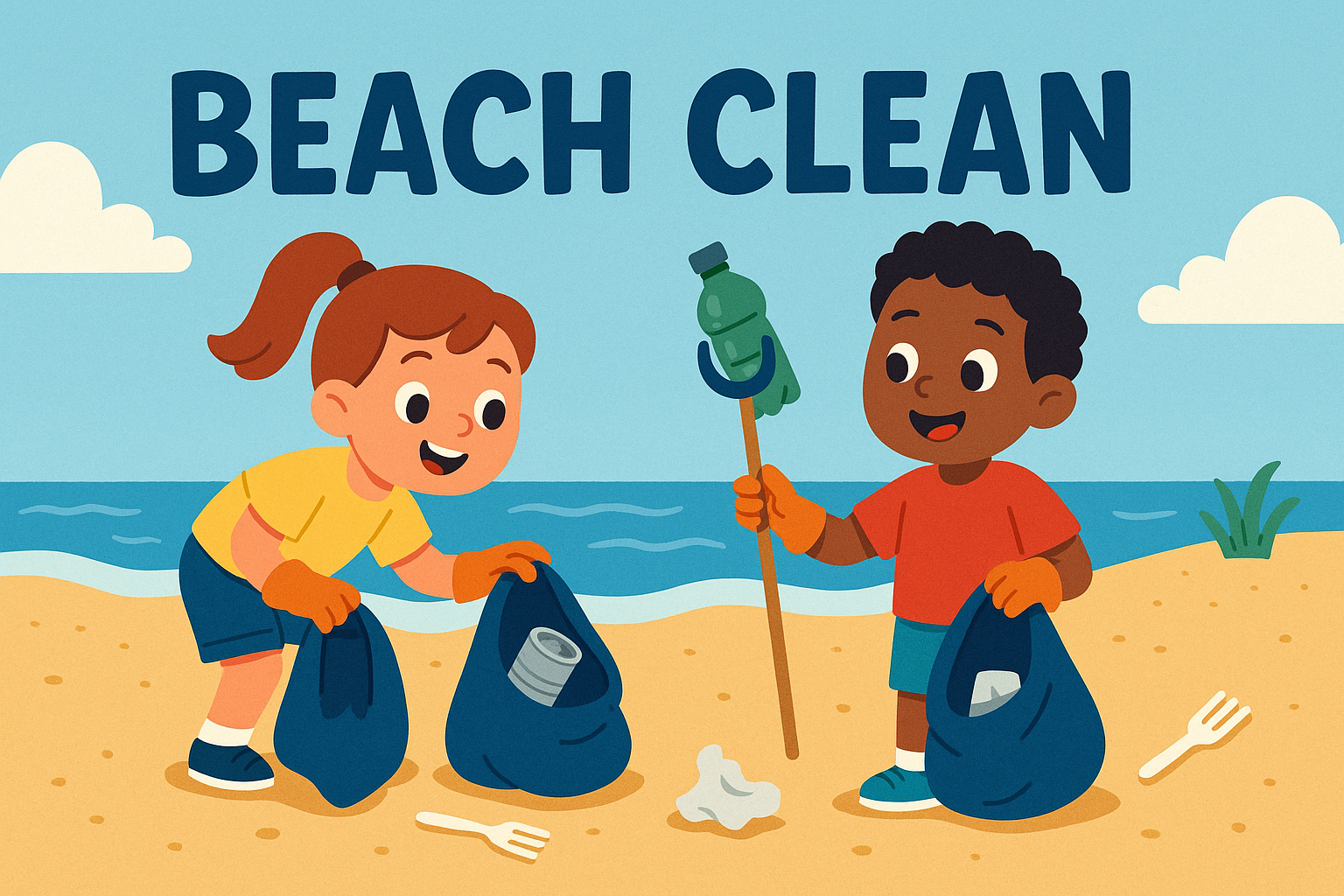
    1. Pick a Spot
      Head to a local beach, shoreline, or coastal path that’s safe and accessible.
    2. Gear Up
      Put on gloves and explain the safety rules: no sharp or suspicious items, always check with an adult before picking something up.
    3. Start Collecting
      Work together to spot and collect litter. Focus on plastic wrappers, bottles, and food packaging.
    4. Sort It
      If possible, separate recyclables from general waste.
    5. Dispose Responsibly
      Use the nearest bins or take your rubbish home to dispose of it properly.

    Variations

    • Beach Bingo: Make a game out of it by spotting items from a beach clean checklist (e.g. bottle cap, crisp packet, seaweed).
    • Make It a Challenge: Set a timer or fill a bag and see how quickly you can clean a section of the beach.
    • Art from Rubbish: Use safe, clean finds to make a beach-themed collage or sculpture.
    • Join a Local Group: Team up with a community or charity beach clean event for a bigger impact.